
The steel industry is the cornerstone of modern industry, and steel products are widely used in construction, transportation, energy, manufacturing and other fields. In the production process of steel, especially in the heat treatment and cooling process, steel products are prone to deformation, affecting their final quality. In this process, industrial water quenching rollers, as important cooling equipment, play a vital role. They not only help the rapid cooling of steel, but also effectively reduce the deformation of steel during the cooling process through specific design and working principles, ensuring the stability of the size and shape of the product.
This article will explore in depth the working principle of industrial water quenching rollers and how to reduce the deformation of steel products through efficient cooling functions, thereby improving the quality and production efficiency of steel products.
What is an industrial water quenching roller?
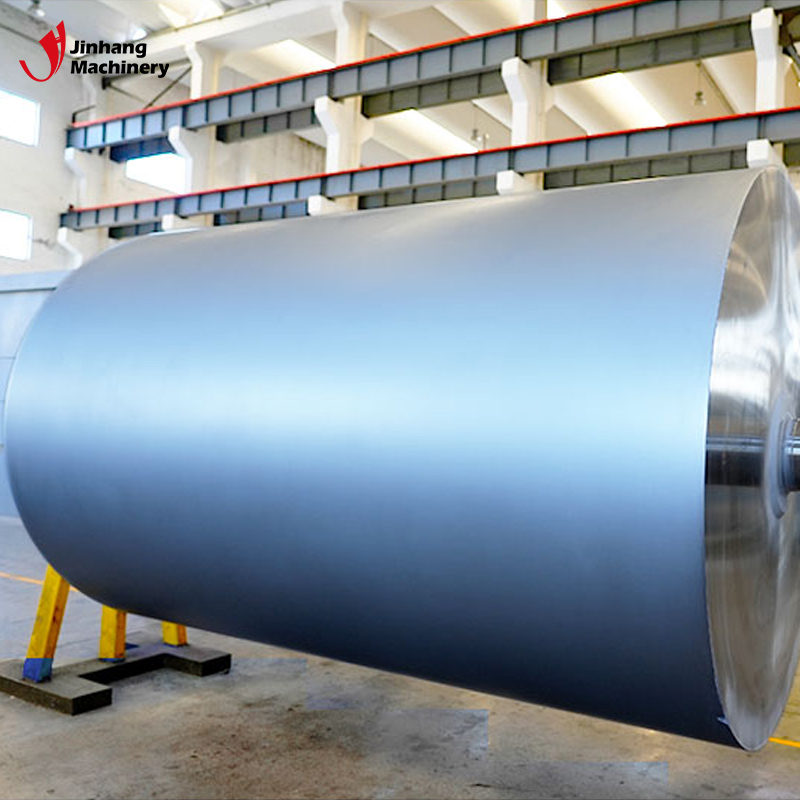
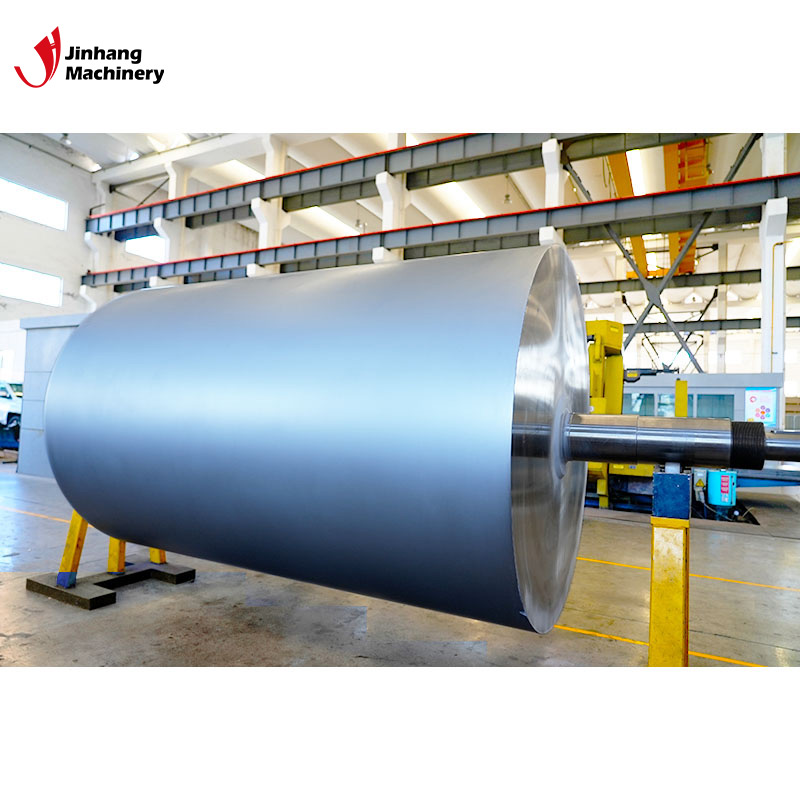
Industrial water quenching rollers are a roller device used in the cooling process of steel production. Its basic working principle is to quickly cool the surface of steel to achieve the purpose of controlling its organizational structure, thereby improving the physical properties of steel. Water quenching rollers generally cool steel products efficiently through water circulation inside the roller body and an external water spray system. Especially in the hot rolling, cold rolling and subsequent heat treatment links in steel production, the role of water quenching rollers is crucial.
The main function of water quenching rollers is to quickly reduce the temperature of the steel surface through efficient heat exchange. This process is usually accompanied by phase change cooling, that is, the surface of the steel is rapidly cooled from high temperature to low temperature in a short time, thereby changing the crystal structure of the steel. This rapid cooling process not only helps to improve the hardness of steel, but also effectively control the deformation of steel.
Structure of water quenching rollers
The structure of water quenching rollers usually consists of three parts: roller body, water spray device and cooling water circulation system. The roller body is generally made of materials with high heat resistance, such as carbon steel, alloy steel, etc. In some high-end applications, the roller body may be chrome-plated or ceramic coated to enhance wear resistance and corrosion resistance. The water spray device is usually distributed on the surface of the roller body, and the cooling water is evenly sprayed on the steel surface to form an efficient cooling effect.
The circulating water system equipped inside the water quenching roller ensures the continuous flow of cooling water through the cooperation of pipes and pumps, thereby maintaining a relatively stable cooling performance. The temperature, flow rate, spray angle and pressure of the water will affect the cooling effect, so the design of the water quenching roller needs to consider these variables in order to achieve the best cooling efficiency.
Why is steel prone to deformation during cooling?
Steel is prone to deformation during cooling, mainly due to thermal expansion and contraction of the material and uneven cooling rate. At high temperatures, the molecular structure of steel is in an expanded state, and as the temperature decreases, the molecules of steel gradually shrink. If this process is not uniform, especially when there is a large temperature difference between the surface and the inside of the steel, internal stress is likely to occur, causing deformation or cracks on the surface of the steel.
In addition, phase changes during cooling can also affect the morphology of steel. For example, when steel is cooled from a high temperature state to a room temperature state, it will undergo a transformation from austenite to martensite, which is usually accompanied by volume expansion, further increasing the risk of deformation. In order to reduce this deformation, it is particularly important to control the cooling rate and cooling uniformity.
Types of deformation
During the cooling process of steel, deformation may take the form of warping, bending, twisting and other common forms. The degree of deformation depends on many factors, such as cooling rate, steel thickness, and uneven cooling. If not controlled, deformation will cause steel products to fail to meet design standards and even affect subsequent processing and performance.
How do industrial water-quenching rollers reduce deformation of steel?
1. Efficient and uniform cooling
The primary reason why water-quenching rollers can effectively reduce deformation is that they can provide uniform and rapid cooling. The temperature difference and thermal stress during the cooling process of steel are the main causes of deformation, and the design of water-quenching rollers can effectively and evenly cool the surface of steel and reduce the temperature difference. The water-quenching roller uses a precise water spray system to ensure that the cooling water can be evenly covered on the surface of steel, thereby reducing the temperature difference between the surface and the inner layer of steel.
De koelefficiëntie van waterafschrikwalsen is zeer hoog. Door het hogesnelheidssproeien van water kan de temperatuur van het staaloppervlak snel dalen, terwijl de temperatuur in het staal relatief langzaam daalt. Op deze manier wordt het temperatuurverschil tussen de binnen- en buitenkant van het staal effectief beheerst, waardoor drastische thermische spanningsveranderingen worden voorkomen en vervorming wordt verminderd.
2. Regel de koelsnelheid
Een te snelle afkoelsnelheid kan een groot temperatuurverschil veroorzaken tussen het oppervlak en de binnenste laag van het staal, wat op zijn beurt vervorming en scheuren tot gevolg heeft. De waterafkoelwals kan de afkoelsnelheid regelen door de stroomsnelheid en de temperatuur van het koelwater aan te passen, zodat deze binnen een geschikt bereik blijft. Bij hoge temperaturen koelt de waterafkoelwals snel af door een hoge stroom koelwater, wat essentieel is voor het hardingseffect van het staaloppervlak. Bij lagere temperaturen kan de waterafkoelwals de afkoelsnelheid verlagen om vervorming door snelle afkoeling te voorkomen.
3. Voorkom plaatselijke oververhitting of onderkoeling.
Plaatselijke oververhitting of onderkoeling van staalproducten tijdens het koelproces leidt meestal tot lokale uitzetting of krimp, wat vervorming veroorzaakt. Het watersproeisysteem van de waterafschrikrol is nauwkeurig ontworpen om ervoor te zorgen dat het koelwater gelijkmatig over het staaloppervlak wordt verdeeld, waardoor plaatselijke oververhitting of onderkoeling tijdens het koelproces wordt voorkomen. Vooral bij grote staaldiktes kunnen de sproeihoek en -druk van de waterafschrikrol worden aangepast aan de specifieke situatie om ervoor te zorgen dat elk deel van het staaloppervlak gelijkmatig wordt gekoeld.
4. Verbeter de vlakheid van het stalen oppervlak
Naast het verminderen van vervorming door de afkoelsnelheid te regelen en het temperatuurverschil te verkleinen, kan de waterafschrikrol ook de vlakheid van het oppervlak van staalproducten verbeteren door het uniforme koeleffect tijdens het afkoelingsproces. Tijdens het afkoelen kan de waterafschrikrol het staaloppervlak effectief vlak houden en vervorming zoals kromtrekken of buigen als gevolg van temperatuurverschillen voorkomen.
Vooral tijdens het warmwalsen van staal draagt het koelende effect van de waterafschrikwals bij aan het behoud van een goede oppervlaktekwaliteit van het staal en vermindert het de spanningsconcentratie aan het oppervlak en inwendig door gelijkmatige koeling. Dit is met name belangrijk voor het garanderen van hoogwaardige staalproducten.
5. Verminder de opeenhoping van interne stress
DewaterkoelrolDoor een redelijke regeling van de koelsnelheid en een gelijkmatige waterstroom kan de opbouw van interne spanningen in staalproducten effectief worden verminderd. Interne spanning is een van de belangrijkste factoren die staalvervorming veroorzaken. Door de koeling met een waterafschrikrol worden het temperatuurverschil en de ongelijkmatige koeling binnen en buiten het staal effectief beheerst, waardoor de vorming en ophoping van interne spanningen en de vervorming van het staal worden verminderd.
JH Machinery is een vertrouwde naam in de rollenindustrie en biedt oplossingen op maat voor wereldwijde afnemers. Van verchroomde rollen tot rubberrollen, onze producten voldoen aan de hoogste kwaliteitsnormen. Sinds onze oprichting in 2001 bieden wij concurrerende prijzen, groothandelsmogelijkheden en een uitstekende service. Kies JH Machinery voor uw rolleninkoop.